Capacitive buttons: the definition of enshittification
Capacitive buttons are an engineering wonder. But also they're terrible and I hate them. Here's why.
You know how TV’s and air purifiers have those touch buttons with an LED behind them? Those are capacitive buttons. They’re everywhere, and I HATE them. I think capacitive buttons may be the worst thing humans have ever invented. Not from a technical standpoint, but from a user experience one.
You might think this is a bit petty. I assure you it is not and I will now explain why in great detail.
What is a capacitive button?
There are two words at play here:
Capacitive (adjective): Of or relating to capacitance. Capacitance is the property of an electric conductor that allows storage of energy via an electric field.

In common cat speak, it’s basically a battery that doesn’t use chemicals.
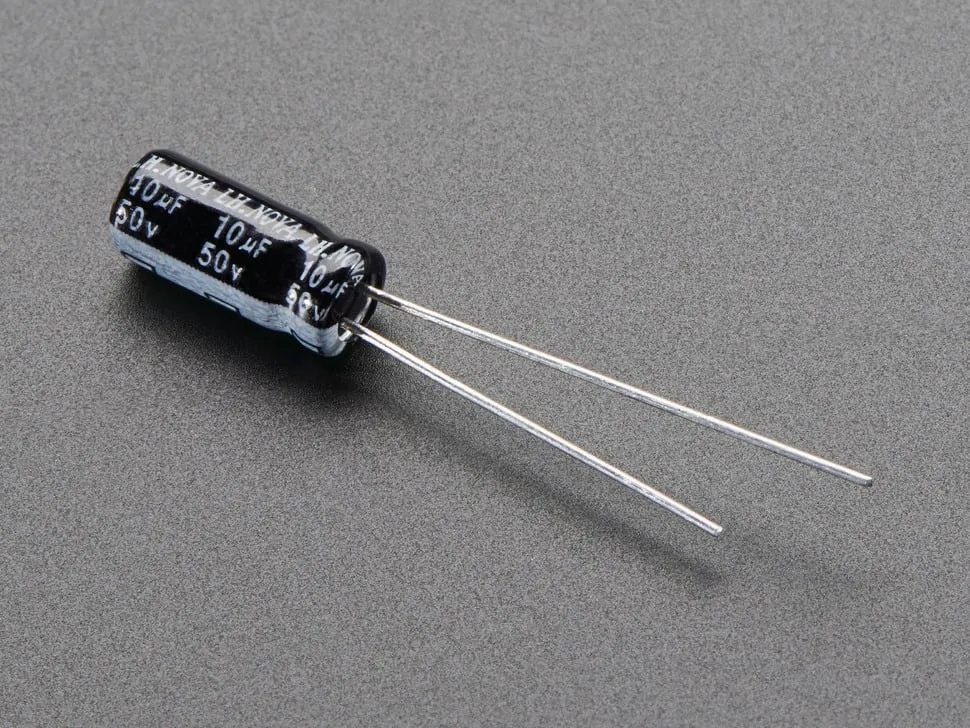
Capacitors (things that store energy using electric fields) are super useful for all sorts of things! There’s tons of them in every piece of electronic you’ve ever touched. They look like this:
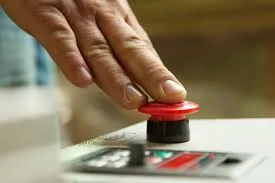
Button (noun) A thing which when pushed, changes something from on to off (or vice versa). It looks like this:
A capacitive button uses the principles of capacitance (and therefore an electric field) to detect whether to be on or off.
This shit is magic
Capacitive buttons are honestly really impressive. They sort of detect your finger “magically”. You didn’t move anything but somehow, the button “knows” you touched it.
Amazing, right? How the fuck does it do that? I mean science … but still! Super cool… we tricked electrons into telling us when a human finger was nearby.
But there’s another, darker property of capacitive buttons. It has no moving parts. Which you might think is a good thing, but unfortunately, capitalism exists so you know where this is going.
They’re basically free
The most important thing about capacitive buttons is that they are essentially free. Normally, when you want to put a button in a product, there is a mechanical switch that ends up on the bill of materials (BOM). They aren’t expensive (here’s an example of a switch on digikey. Forty-two cents each!). But you know whats cheaper than 42 cents? 0 cents.
You make a capacitive button by putting a copper pad on your circuit board and using the same microcontroller that you already need for other stuff. No extra parts. Just software. Sure, you have to take up some circuit board real estate and you have to make sure the pad is reasonably close to the surface of the product, but that’s easy enough. So essentially you just eliminated 42 cents times however many buttons you have. That might not sound like much, but if you had 10 buttons and you sell 1 million units, you just saved 4.2 million dollars!
Yes, companies get bulk discounts and not everyone makes 1 million things. The point is that it can be significant. So keep your “Well, actually…” to yourself.
Here’s the problem
This sounds great right? It’s like a button that costs nothing. But let me hit you with a scenario:
Picture this. It’s time to go to bed. You turn off the tv. You set the thermostat to 68. Then you go to turn the light off. You touch the switch and the light doesn’t turn off. You press it again and then it works.
What in the unholy fuck??? The switch only works most of the time??? That’s insane! Completely unacceptable. A physical light switch works every time. You’re telling me sometimes this doesn’t work? Fuck that.
And that is exactly what you’re agreeing to every time you use a capacitive button. Sometimes it doesn’t work. There’s no way around it. A million edge cases means sometimes, the button won’t register that you pushed it.
Another thing you lose with capacitive buttons is feedback. When you push a mechanical button, you know you’ve pressed it. You can feel the little click or the switch lock into place. It’s a small thing but it’s very important. Your brain registers that feedback instantly so you know if it was your fault because you didn’t press all the way.
Capacitive buttons? Not so much. Did it not register my press or did I just not press hard enough? No one will ever know, so fuck me I guess.
But it’s cheaper
This is the ultimate example of enshittification. With very few exceptions, regular mechanical buttons are better for the consumer. They give positive feedback and work every time, for thousands of actuations. Every consumer prefers a physical button. Yet here we are in 2026, and these fucking things are everywhere. Why? Pure profit. There is no other explanation.
This is the definition of enshittification. Most of the technology around us is getting worse, not better and capacitive buttons are a prime example.
We just had a worldwide pandemic. This is nothing.
Alright, is this the worst thing that could happen? No. But it’s terrible none the less. It wasn’t always this way. There was a time when we had clear, user-centric design. Buttons were carefully chosen because they optimized the user experience. How a button felt wasn’t just functional, it was aesthetic. It could convey a certain build quality or style.
And I know we’ll never fully get rid of them. But I implore you: the next thing you buy, check the buttons. When my wife and I bought our last car, something stood out about the Kia Telluride we bought: the climate controls, media shortcuts? PHYSICAL BUTTONS baby. And boy do they feel good.
So do yourself a favor: Pick something with real old fashioned mechanical buttons next time you buy. You’ll thank me.